
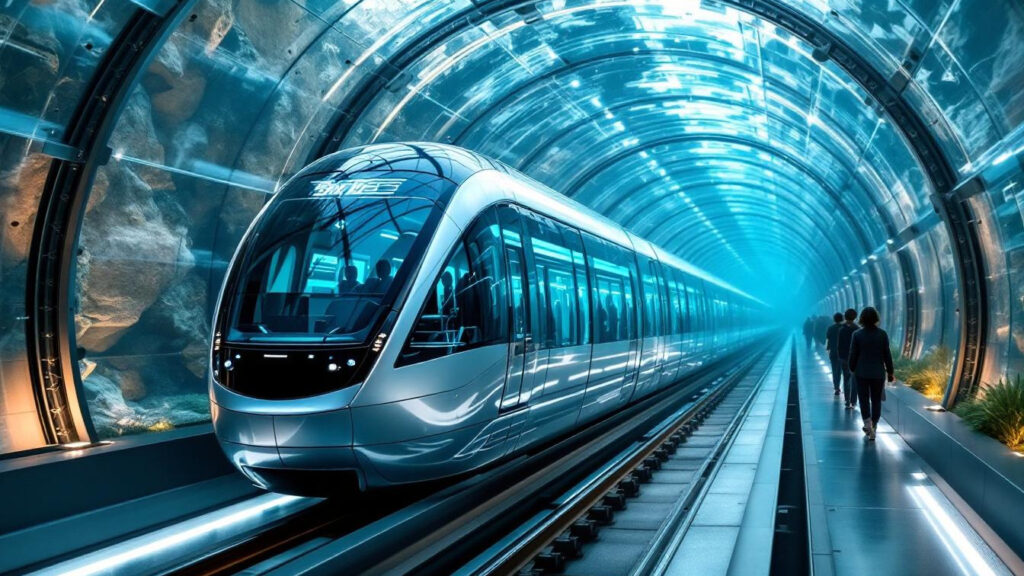

Groundbreaking transportation projects often seem like the realm of science fiction, yet the world’s longest underwater train is on the horizon, promising to revolutionize the way continents connect. This ambitious venture, focused on linking Dubai and Mumbai, showcases how engineering ingenuity can reshape global connectivity and trade dynamics. By weaving through the depths of the Arabian Sea, this underwater train represents not just a significant leap in transport innovation, but also a potential strategic asset for the economies involved. With a proposed route stretching nearly 2,000 kilometers, it aims to offer seamless travel and freight transport, potentially slashing travel time and opening new avenues for commerce.
The Vision Behind the Underwater Train
The feasibility of constructing this engineering marvel has been presented by Abdullah Alshehi, a prominent figure in the UAE’s infrastructural advancements. The envisioned direct link would primarily traverse sea, starting from Fujairah and concluding in Mumbai. This underwater railway infrastructure stands to not only facilitate cross-continent travel but also nurture a deeper economic collaboration between the UAE and India.
Potential Economic Benefits
The prospective economic impacts of the underwater train are monumental. Not only would it enhance travel efficiency by significantly reducing the current air travel times, but it also holds promise for transforming trade logistics:
- Facilitating speedy cargo transport, minimizing delays in supply chains.
- Positioning the UAE as a pivotal transport innovation hub.
- Fostering growth in tourism between the two mega-cities.
Engineering Challenges Ahead
While the vision is ambitious, significant challenges lie ahead. Creating an underwater connection of this magnitude necessitates innovations in marine construction techniques:
- Addressing geological and seismic safety, especially given the tectonic plate boundaries in the Arabian Sea.
- Ensuring watertight integrity across vast distances.
- Evaluating the environmental impact on marine ecosystems throughout the construction and operational phases.
Current underwater tunnels, like Japan’s Seikan Tunnel, measure under 54 kilometers. Thus, the proposed underwater train would be a staggering nearly 37 times longer, underscoring the project’s complexity.
Environmental and Sustainability Considerations
As the project gains traction, environmental sustainability remains a central focus. The planning phase emphasizes the need for eco-friendly practices, potentially setting new industry standards. Key considerations include:
- Utilizing sustainable materials for construction.
- Incorporating renewable energy sources into operations.
- Protecting marine life and their habitats during and post-construction.
A Strategic Perspective on Connectivity
This underwater train could embody more than just transit. It stands as a potential symbol of unity between the UAE and India in an evolving geopolitical landscape. Beyond passenger travel, the project aims to stimulate bilateral resource exchange, crucial for long-term sustainability:
- Facilitating oil exports from the UAE.
- Importing vital freshwater resources from India’s Narmada River.
As discussions about the train progress, its role in solidifying India-UAE relations and regional economic dynamics becomes increasingly apparent.
Global Reception and Future Prospects
The announcement has sparked extensive dialogue around the globe, with the project seen as a hallmark of human ambition and technological innovation. While skepticism remains about feasibility, the UAE’s history of executing grand projects fuels optimism. With potential prototypes and testing phases expected by the late 2030s or even 2040s, patience and continuous engineering advancements will be paramount.
As the world watches closely, the prospect of an underwater train connecting two continents may just be the first step towards a future where subsea transportation becomes as commonplace as air travel.