
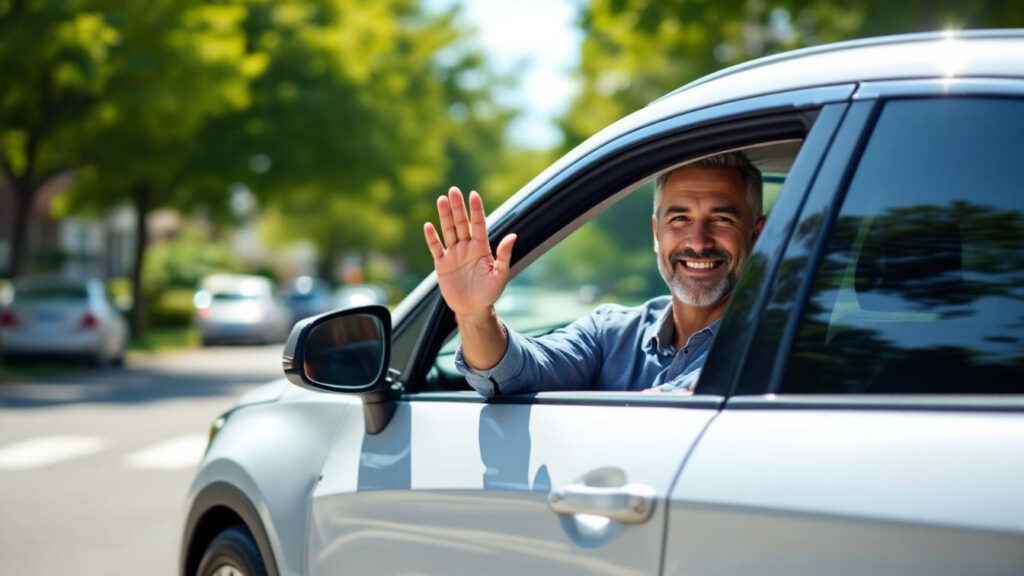

The simple act of waving a “thank you” to a driver who has kindly slowed down at a crosswalk may seem trivial, but it actually reflects significant aspects of our personalities. In the fast-paced rhythm of contemporary urban life, these fleeting moments often illuminate deeper traits, revealing how we navigate social interactions. Psychologists have highlighted that such gestures of gratitude are tied to personality characteristics such as empathy, agreeableness, and conscientiousness. By acknowledging the driver, pedestrians engage in a brief but meaningful exchange that emphasizes courtesy and community cohesion.
This ritual reflects an unwritten social contract, showcasing the balance of power between pedestrians and drivers and nurturing mutual respect. In an era where urban anonymity can breed disconnection, a simple wave transcends the chaos of daily life, re-establishing a human connection. It communicates recognition not just of the driver’s legal obligation to yield but also of their personal choice to pause in the midst of a busy day. Waving thanks isn’t merely about manners; it’s a reflection of a deeper understanding of our interdependence in public spaces.
Psychological Insights into Waving Thank You
According to behavioral psychologists, the act of waving embodies layers of meaning, including acknowledgment, gratitude, and respect. Each wave signifies an understanding of shared experiences in public spaces, enhancing the social fabric of urban environments. The meaning of this gesture builds upon the premise that recognizing the kindness of others can foster a sense of belonging and enhance community ties.
Key Personality Traits Linked to Waving
- Agreeableness: Individuals who wave often display warmth, kindness, and an innate desire for social harmony. They prioritize connection and foster positive interactions.
- Conscientiousness: Those high in this trait often feel a duty to adhere to social norms. For them, the wave serves as a necessary punctuation mark in adhering to proper road etiquette.
- Empathy: This ability to understand another’s perspective enhances the likelihood of expressing gratitude in a shared moment.
The spectrum of personality traits underscores how a simple, nonverbal gesture encapsulates much about human psychology and social behavior. While its influence may seem minimal in everyday interactions, it serves as a critical element in shaping and maintaining interpersonal relationships within public settings.
Understanding the Cultural Context of the Gesture
In the grand tapestry of social behavior, the significance of the thank-you wave varies widely across cultures. In regions where explicit communication is the norm, such as in the United States, this gesture is often expected and serves as an essential social cue. Conversely, in high-context cultures, unspoken norms may dictate that such overt acknowledgment is unnecessary. These cultural differences illustrate not only how social etiquette is shaped by geography but also how personality traits can be viewed through the lens of cultural expectations.
The Ripple Effect of Gratitude in Urban Life
When a pedestrian waves thank you, they don’t just acknowledge the driver’s action; they participate in a broader social exchange that may influence future interactions. Behavioral science suggests that positive reinforcement encourages drivers to repeat polite behaviors, ultimately fostering a more courteous urban environment. Each small act of gratitude not only enhances individual experiences but also contributes to evolving cultural norms around driving and pedestrian interactions.
As we navigate our increasingly urban landscapes, these small gestures of acknowledgment can cultivate a sense of community and belonging, fighting against the deeper currents of isolation characterizing modern life.