
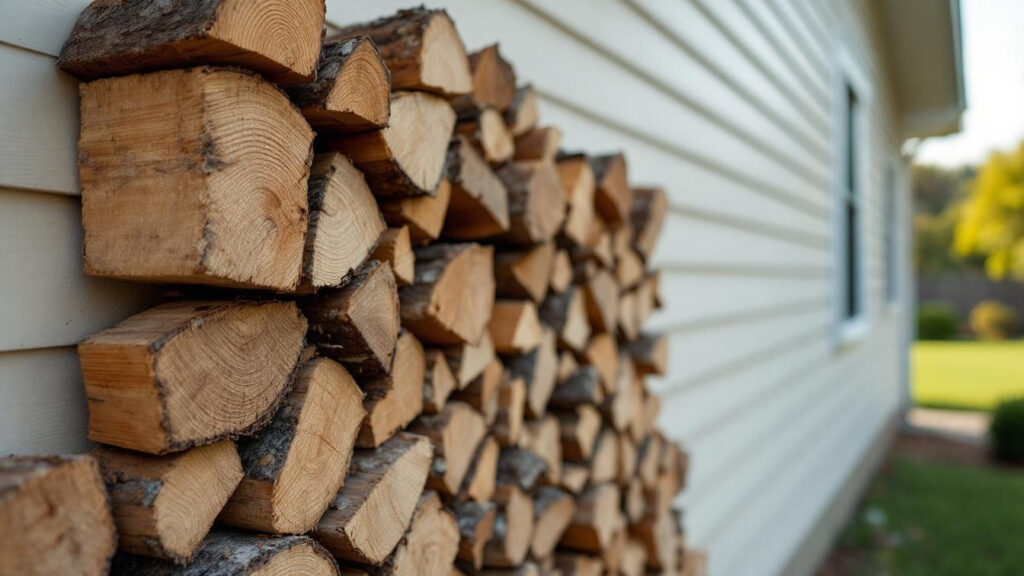

Homeowners often overlook a critical aspect of firewood stacking that can lead to severe infestations: placing firewood too close to the home. This seemingly innocuous mistake can create the perfect environment for termites, inviting them directly into the structure and leading to potentially costly insect damage. As winter approaches, many people are preparing their homes for the colder months, which often includes stockpiling firewood for warmth. However, understanding proper wood storage techniques is essential in preventing unwelcome pest control challenges.
Improper firewood stacking exposes the vulnerability of home foundations and walls to these destructive pests. Keeping firewood at least 20 feet away from the home, on raised platforms, and in well-ventilated locations is fundamental to maintaining effective home protection. During this seasonal transition, ensuring the safety of both firewood and your home’s integrity becomes paramount, especially with the heightened humidity and moisture levels prevalent in winter.
- Maintain a distance of at least 20 feet between firewood stacks and home structures.
- Utilize firewood racks or pallets to store wood off the ground.
- Ensure adequate airflow around stacked logs to reduce moisture.
- Inspect firewood for signs of insect damage prior to bringing it indoors.
- Regularly clear debris and vegetation around the home to deter termites.
The Risks of Improper Firewood Stacking
When firewood is stored adjacent to the house, it creates a pathway for termites to travel from the wood straight into wooden structures. The damp conditions that arise from stacked firewood absorbing moisture contribute to the risks as well. Terrestrial termites thrive in humid environments and can quickly compromise the integrity of a home.
The Importance of Ventilation
One common mistake is stacking firewood too tightly. This can trap moisture, leading to mold growth and increased risk of insect infestations. Proper firewood safety involves leaving space between logs to promote airflow. This method not only helps in keeping the wood dry but also mitigates the risk of insect damage.
Effective Pest Control Measures
Combating the potential for a termite infestation requires a proactive approach. Homeowners should regularly inspect firewood and surrounding areas to catch any signs of termite activity early. In addition, implementing barrier methods such as physical barriers or chemical treatments around the foundation can be beneficial in deterring these pests.
| Firewood Stacking Best Practices | Benefits |
|---|---|
| Keep firewood at least 20 feet from the home | Reduces risk of direct access for termites |
| Use firewood racks to elevate logs | Prevents moisture retention |
| Maintain loose stacking for airflow | Minimizes mold growth and pest attraction |
| Inspect for insect signs before use | Ensures safe burning practices |
| Regular cleanup of surroundings | Deters pest habitats near the home |
Final Thoughts on Firewood Storage
Understanding the relationship between firewood stacking and pest control is crucial for effective home maintenance. By taking the necessary precautions and employing best practices, homeowners can enjoy a cozy fire without the worry of an impending termite infestation. Safeguarding firewood storage is not just about warmth; it’s about protecting one’s biggest investment from potential destruction.