
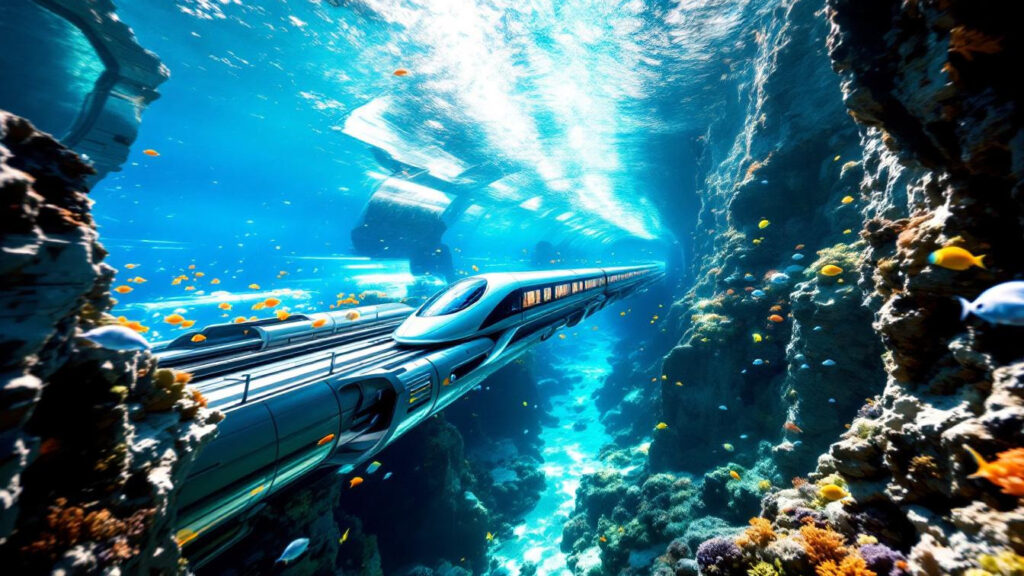

Imagine a world where you can travel from one continent to another in less than 30 minutes. It sounds like a scene out of a sci-fi movie, but recent advancements in underwater railway technology are bringing this vision closer to reality. A revolutionary underwater railway project is set to connect Europe and Africa through the Strait of Gibraltar, drastically cutting down travel times and providing a more efficient mode of transportation. Aiming to utilize high-speed trains and tackle engineering challenges head-on, this ambitious transcontinental tunnel could reshape global travel and commerce.
Why Build an Underwater Railway?
The rise of an underwater railway is driven by the need for speed and efficiency. Traditional modes of travel, like airplanes, are swift but pricey and contribute to pollution. Ships offer a cost-effective alternative but are often slow. A high-speed underwater railway enables faster movement of both people and goods at lower environmental costs, thereby creating new opportunities for international tourism and commerce.
Engineering Marvels Beneath the Waves
What makes this project ambitious? Some proposed tunnels are planned to be over 1,000 feet deep, exceeding the height of many skyscrapers. This poses significant engineering challenges that experts are keen to tackle. The technology involves:
- Tunnel Boring Machines (TBMs): These massive drills carve through rock and dirt, creating stable tunnels.
- Immersed Tube Tunnels: Pre-fabricated tunnels that are submerged and sealed together underwater.
- Advanced Ventilation and Drainage systems: Ensuring fresh air circulation while preventing flooding.
Each structural component must be meticulously designed to withstand extreme ocean pressures, tectonic movements, and potential flooding.
Possible Routes and Projects
The concept of an underwater railway isn’t limited to just the Europe-Africa link. Other intriguing projects are also being examined, including:
- A 13,000 km route connecting China and the U.S. through the Bering Strait.
- A tunnel between the UK and mainland Europe, building on the success of the Channel Tunnel.
- A potential short tunnel connecting Japan with South Korea, boosting economic ties.
The feasibility of these projects varies, but the success of the Channel Tunnel offers a proven template for what can be achieved.
Challenges Ahead
With every innovative engineering project come inherent risks. The construction of underwater tunnels can encounter numerous challenges, such as:
- Seismic risks and tectonic activities.
- Potential pressure damage and flooding issues.
- Rising costs and navigating the political landscape.
The Channel Tunnel’s construction alone took over 15 years and cost nearly $21 billion, illustrating the extensive time and resources needed to realize such a grand vision.
The Future of Transportation
Despite the challenges, governments and engineering firms are committed to the vision of underwater railways. The benefits could be significant, including:
- Rapid transit options for goods, minimizing the reliance on planes and ships.
- Boosting tourism and international travel.
- Environmental advantages through the use of cleaner electric trains.
As technological advancements continue to progress, the dream of rapid transcontinental travel may soon become a reality. The trajectory indicates not just innovation in infrastructure, but a shift in how the world connects, both literally and metaphorically.