
In today’s fast-paced world, microwaves are essential for quick meals and reheating leftovers. However, the convenience of this kitchen appliance comes with a caveat: not all containers labeled as microwave-safe are genuinely safe. Misleading labels can lead to toxic chemicals leaching into food, posing significant health risks. Understanding which containers can potentially cause food contamination is vital for ensuring safety in the kitchen.
Many consumers are unaware that certain plastics can release harmful substances when heated, while metal containers can create a fire hazard. Addressing these concerns requires an awareness of the types of materials to avoid. This article dives deep into the common materials that negate safety and provides insights to help you make informed decisions for healthy cooking practices.
Common Misleading Labels in Microwave Containers
While many manufacturers use the term microwave-safe to market their products, it is essential to recognize that this assurance is not a blanket guarantee of safety. For instance, even containers that are labeled microwave-safe may not be suitable for all types of food, particularly those high in fat content, which can accelerate plastic leaching.
Types of Containers That Should Be Avoided
- Metal Containers: These should never be placed in a microwave, as they reflect waves, causing uneven heating and potential fires.
- Certain Plastics: Always check for the microwave-safe symbol. Even then, avoid using old or scratchy plastic containers to reduce toxic chemicals.
- Styrofoam: Heating styrofoam can release harmful chemicals into food, making it unsuitable for microwaving.
- Non-Microwave-Safe Glass: Glass with metallic accents may shatter in the microwave, posing serious risks.
- Compostable Containers: These typically have plastic coatings that can leach into food when heated.
The Risks of Using Unsafe Containers
Using containers that are not genuinely microwave-safe can lead to serious health implications. Chemical leaching poses a silent threat, as substances from the container can mingle with food, potentially leading to hormonal disruptions or other health issues. Take, for instance, plastics that are known to contain BPA: heating these can magnify the risks to your health.
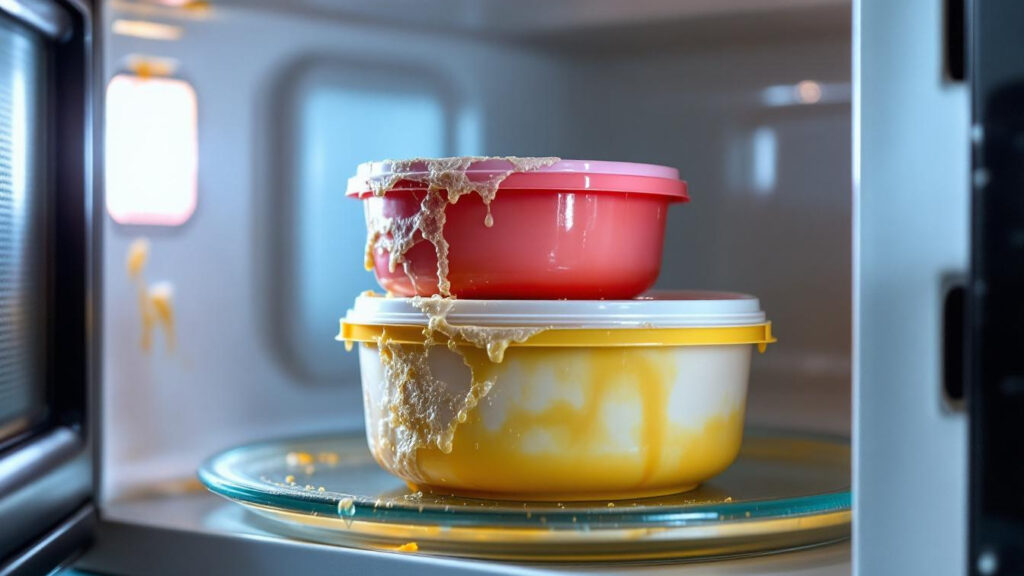
Additionally, using non-safe containers can result in heat damage or even explosions inside the microwave. Scenarios like food spillage or broken glass can not only ruin a meal but also create hazardous situations in your kitchen.
Identifying Truly Microwave-Safe Containers
Understanding how to spot microwave-safe containers is pivotal in ensuring kitchen safety. Several useful tips include:
- Always look for the microwave-safe symbol before using a container.
- Read the manufacturer’s instructions for specific guidelines regarding material safety.
- Choose materials like borosilicate glass, silicone, or certain ceramics that are known to withstand microwaving.
- Check the age and condition of plastic containers; old and damaged ones are more likely to leach harmful substances.
Safe Alternatives for Microwaving Food
The good news is that many safe alternatives exist for reheating food. Consider options like:
- Microwave-Safe Glass Containers: Ideal for safe heating, as they don’t react with food.
- Silicone Containers: Flexible, heat-resistant, and safe for microwave use.
- Ceramics: Use oven-safe ceramics without metallic paint to ensure they are microwave-friendly.
By choosing wisely and being aware of the potential microwave hazards, you can safely enjoy the convenience of modern cooking while protecting your health and well-being.