
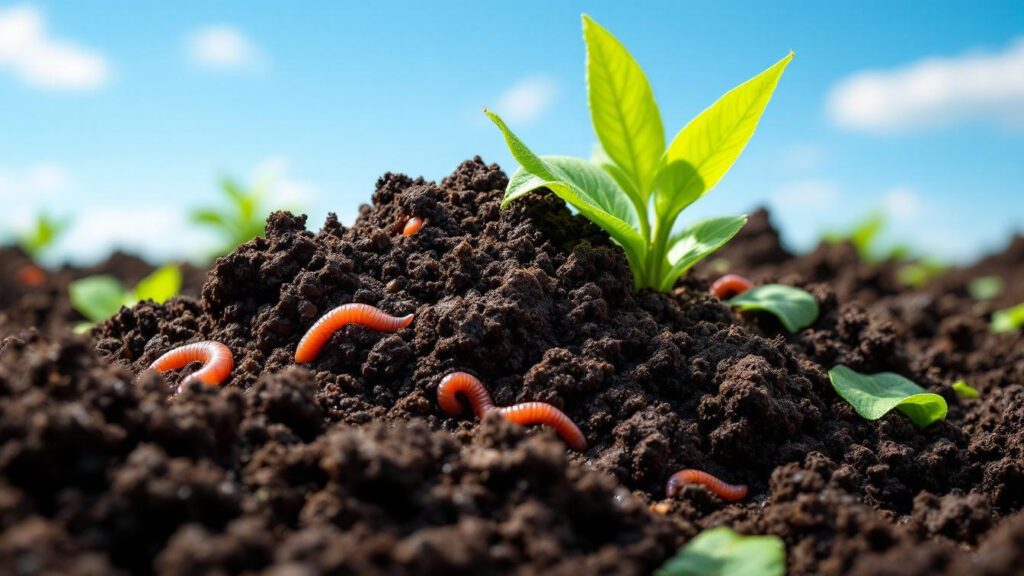

Across the globe, certain regions stand out for their extraordinary agricultural potential, and nothing exemplifies this better than the areas rich in fertile soil. A recent exploration into the factors that contribute to the world’s most productive soils reveals the critical role of climate, geology, and land management. Notably, Ukraine’s Chernozem, often regarded as the world’s richest soil, offers a compelling case study. This dark, nutrient-dense earth is not merely a product of chance; it results from millennia of climatic stability and the decay of organic matter, leading to an ecosystem that supports vibrant plant growth and bountiful harvests.
The significance of soil fertility extends beyond individual crops. Understanding the composition and health of these soils can profoundly impact global food security, especially as challenges from climate change and population growth mount. As a soil scientist explains, the intricate balance of soil composition, nutrient availability, and biological activity creates a thriving agricultural environment. Regions like the U.S. Midwest, renowned for their rich Mollisols, demonstrate how similar principles apply across continents. Here, practical strategies in land management have turned vast stretches of temperate grassland into productive farmland, showcasing the essential relationship between soil health and sustainable agriculture.
Understanding Soil Fertility: Key Components
Soil fertility is more than just nutrient availability; it encompasses a variety of factors that contribute to overall plant health. Key components include:
- Nutrient Content: Essential nutrients such as nitrogen, phosphorus, and potassium play a crucial role in plant development.
- Soil Structure: Well-aerated and structured soil facilitates water infiltration and root growth.
- Water Retention: The ability to hold moisture is vital for plants, especially in climates with inconsistent rainfall.
- Biological Activity: Healthy soils teem with microorganisms that help decompose organic materials and recycle nutrients.
- The acidity or alkalinity of soil influences nutrient availability to plants.
The Chernozem Belt: A Global Powerhouse of Fertile Soil
Nearly a quarter of the world’s fertile soil is found in the Chernozem belt, primarily located in Ukraine and parts of Russia. This area boasts a thick layer of dark, organic-rich topsoil, ideal for agriculture. Over 65% of Ukraine’s arable land comprises Chernozem, making it one of the most productive regions for crops like wheat and corn. The formation of this soil type is rooted in historical climatic conditions that allowed organic matter to accumulate over thousands of years.
Similarly, the United States’ Great Plains, particularly in states like South Dakota and Nebraska, feature Mollisols—soils akin to Chernozem that support extensive grain production. This rich earth underscores the importance of habitat preservation and sustainable practices in maintaining soil fertility.
The Role of Climate and Land Management
The climatic conditions conducive to soil formation are complemented by effective land management practices. Crop rotation, cover cropping, and minimal tillage not only enhance soil health but also improve productivity. These methods prevent nutrient depletion and promote biodiversity within the soil ecosystem, ultimately leading to more resilient agricultural systems.
The Global Challenge of Soil Degradation
Despite the advantages of regions rich in nutrient-rich soil, many face threats from soil degradation due to unsustainable practices, climate change, and urbanization. Erosion, nutrient depletion, and pollution can compromise the very foundations of agricultural productivity. An emphasis on sustainable practices is crucial for maintaining soil health and ensuring that the fertile lands continue to yield food for future generations.
Understanding the complex interplay of soil fertility factors is essential not only for scientists but for anyone involved in agriculture and land management. By prioritizing effective strategies and preserving vital ecosystems, a more sustainable and productive global agricultural landscape lies within reach.