
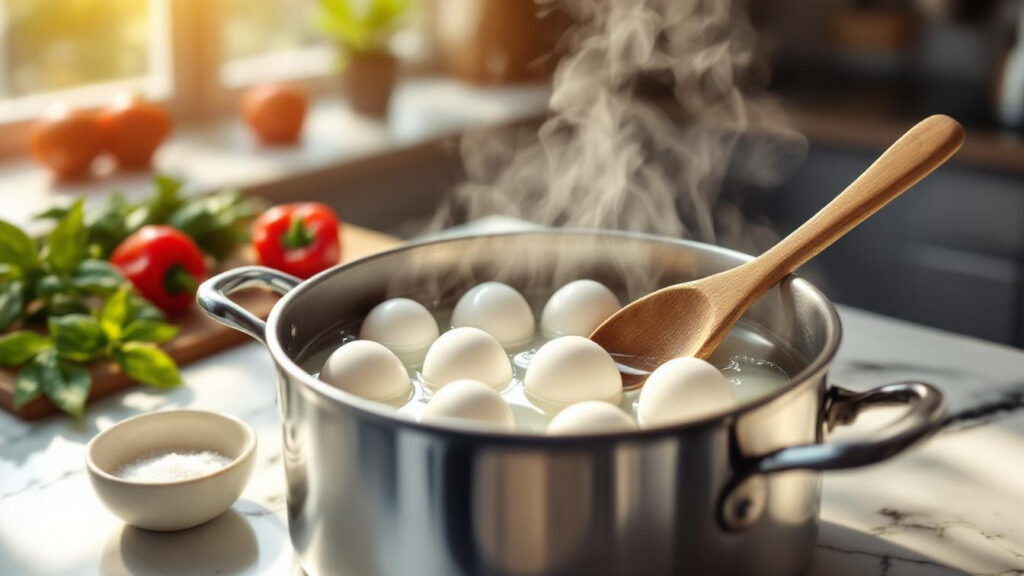

Boiling eggs may seem like a simple kitchen task, but it can quickly become frustrating when you discover that your eggs have cracked open in the pot. This common issue not only leads to a messy cooking experience but can also ruin the texture of the eggs. Surprisingly, there’s a science behind why this happens, and with a few simple adjustments, it’s possible to enjoy perfectly boiled eggs every time. A time-tested secret from grandmothers around the world allows cooks to prevent cracking and achieve the ideal egg consistency.
The Science Behind Egg Cracking While Boiling
When eggs are placed in boiling water, they undergo a rapid temperature change that can lead to cracks. The primary culprits here are thermal shock and air sac expansion. If an egg goes from a cold fridge into boiling water, its shell expands unevenly, causing it to crack. Additionally, as the egg heats, the gas in its air sac expands too quickly, applying pressure to the shell. Understanding these factors is essential for mastering the art of boiling eggs without damage.
How to Prevent Cracking: Essential Cooking Tips
Following a specific set of practices significantly reduces the chances of egg cracking during boiling. Here are the key strategies:
- Start with Room Temperature Eggs: Allow eggs to sit out for 15-30 minutes before cooking. This simple step minimizes thermal shock.
- Gentle Setup: Place eggs in a single layer in the pot and cover them with at least an inch of water to prevent collisions.
- Controlled Heating: Bring water to a gentle simmer instead of a rolling boil. A violent boil increases the risk of cracks.
- Timing Matters: Use a timer to ensure consistent cooking based on your desired doneness. For hard-boiled, aim for 10-12 minutes.
- Ice Bath Cooling: After boiling, immediately transfer eggs to an ice bath to halt the cooking process and make peeling easier.
Grandmother’s Secret Method
A cooking tip passed down through generations is to use a steamer basket. Instead of placing eggs directly into boiling water, put them in a steamer above simmering water. This gentle method reduces commotion, ensuring that eggs don’t clash against each other. Plus, it helps avoid the dreaded green ring around the yolk. Steaming allows the eggs to cook evenly without the risk of cracking, making this technique a favorite in many kitchens.
Executing the Steaming Method
To try grandmother’s steaming secret, follow these simple steps:
- Prepare: Place eggs in a steamer basket, leaving space for steam to circulate.
- Setup: Add 1-2 inches of water to a pot and bring it to a gentle boil.
- Cover: Set the steamer basket over the pot and cover with a lid.
- Cooking Time: Steam for 10-12 minutes, then remove with tongs.
- Cool Down: Transfer immediately to an ice bath for easy peeling.
Using these straightforward techniques not only leads to beautifully cooked eggs but also enhances your overall cooking experience in the kitchen.